Monday, 8 April 2019

Sri Lanka seeks enhanced military training from India

Sri Lanka has sought enhanced military training from India, according to President Maithripala Sirisena’s office.

Visiting Indian Defence Secretary Sanjay Mitra called on Mr. Sirisena on Monday, and wide-ranging matters, including bilateral defence cooperation between the neighbouring countries and regional security, were discussed, officials said.

“India and Sri Lanka agreed to increase cooperation in security and defence spheres in several areas, including regional security, curbing drug smuggling and human trafficking and training of members of the security forces,” a statement from the presidential media unit said.

Thanking India for its partnership, Mr. Sirisena requested to increase the number of personnel trained by India. The Indian Defence Secretary agreed to look into the possibility of enhancing training facilities, the statement further said.

Currently, over 60% of Sri Lanka’s military personnel pursue their young officers’ course, junior and senior command courses in India, according to defence sources in Colombo.

Meanwhile, ‘Exercise Mitra Shakti’, the sixth edition of the joint military training exercise between the Indian Army and the Sri Lankan Army, concluded in Badulla district, in Sri Lanka’s Central Province, on Monday.

Contingents from the two countries jointly planned and executed a series of “well-coordinated tactical operations based on scenarios that are likely to be encountered in rural and urban environment”, a press release from the Indian Ministry of Defence said. The two-week programme is part of an initiative that began in 2013 as part of military diplomacy between India and Sri Lanka.

Tuesday, 19 March 2019

Sri Lanka’s new tourism advisory committee gets down to work


Mar 14, 2019 (LBO) – With an eye on achieving the targeted 3 million tourist arrivals this year, a newly constituted Tourism Advisory Committee has been appointed by Minister of Tourism Development, Wildlife and Christian Religious Affairs, John Amaratunga.

The 14 member committee comprises of private sector tourism stakeholders and is headed by business magnate Harry Jayawardena.

The other members of the Tourism Advisory Committee are: Dammika Perera (Hayleys), Merril Fernando (Dilmah), Abbas Esufally (Hemas), Sanjiv Gardiner (Galle Face Hotel Group), Krishan Balendra (John Keells), Shiromal Cooray (Jetwing), Kuok Meng Xiong (Shangri-la), Ashok Pathirage (Softlogic), C.J. Wickremasinghe (Connaissance), Raman Murthy (Taj Hotels), Nalin Jayasundera (Aitken Spence Travels), Vipula Gunatilleka and N. Ranasinghe. The Committee Coordinator is Dinesh Weerakkody while the Convenor is Felix Rodrigo.

The new Advisory Committee met for the first time at the Tourism Ministry recently under the auspices of Minister John Amaratunga.

The Chairman of the four tourism bureau and department heads presented their respective performance reports and forward plans to the Advisory Committee.

Minister Amaratunga stated that arrivals so far this year are on target and Sri Lanka stands to benefit from some big international events that are to be held in the country this year.

Some of them include the IronMan and Raid Amazon events, CITES Global Conference of Parties which will see the participation of nearly 4,000 foreign delegates in May and the Worldwide Bohra community spiritual gathering that will attract around 30,000 followers.

He expressed confidence that with the stabilization of the political environment and security situation, arrivals are likely to pick up much faster in the latter part of the year.

Tourism Advisory Committee Chairman Harry Jayawardena noted that it was a commendable move to bring Wildlife under the Tourism portfolio as the two subjects were inter-connected.

He noted that this was a major strength and many pending issues could now be easily resolved. Jayawardena also cautioned the industry about price undercutting, stating that it is the country that will have to face the repercussions of a price war. He called for unity among the major players and to work towards the greater good of the industry.

John Keells Chairman, Krishan Balendra drew attention to the airport capacity issue which continues to be a major stumbling block to the industry. He pointed out that if 4 million arrivals are to be achieved by 2020 there must be a corresponding increase in airport capacity. Balendra added that a new terminal was no longer an option but an urgent necessity.

Meanwhile Sri Lanka Tourism revealed that its main targets for the next two year were to achieve Rs. 7bn in foreign exchange earnings, provide direct and permanent employment to 600,000 individuals out of whom at least 10 percent would be women, and to increase the per capita spend per tourist from the present US$ 164 to 210 dollars per visitor.

In order to prepare for the anticipated larger numbers Sri Lanka Tourism is to invest in new infrastructure development, expedite resort land alienation, informal sector integration and strengthen Tourist Police and lifesaving presence in all key resort areas. Sri Lanka Tourism will also facilitate loans for development of home stay units, construction of additional rooms in identified locations and also expedite new resort development.

The Tourism Advisory Committee is expected to meet regularly and monitor progress of the proposed development initiatives.

Sri Lanka tourist arrivals up by 7.0 percent in February 2019


Mar 10, Colombo: Sri Lanka's tourist arrivals rose 7.0 percent in February 2019 compared to the same period last year, the data released by the Sri Lanka Tourism Development Authority (SLTDA) showed.

The month recorded 252,033 tourists arriving in the country compared to the 235,618 arrived in February 2018.

India, United Kingdom, China, France and Germany were Sri Lanka's top five international tourist generating markets in the month of February this year.

India was the largest source of tourist traffic to Sri Lanka with 13% of the total traffic received in February 2019. United Kingdom accounted for 12% of the total traffic; while China, France and Germany accounted for 11%, 7% and 7% respectively.

Arrivals from North America rose 61.7 percent to 16,280 in February and the arrivals from US rose 61.7 percent to 9,678 during the month while arrivals from Canada increased 61.8 percent.

Tourist arrivals from Europe increased by 11.4 percent with the arrival of 135,934 tourists. Most of the tourists came from UK (29,750), followed by France (17,295), Germany (17,268), and Russian Federation (13,008).

Tourist arrivals from Middle East declined by 5.2 percent with the arrival of 3,691 visitors compared to the 3,894 arrived in February 2018.

Tourist arrivals from Asia & Pacific declined by 3.8 percent with 94,058 arriving in the island. Tourist arrivals from India declined by 1.9 percent with 32,286 visitors arriving while arrivals from China fell by 22.0 percent to record 28,039 arrivals.

Arrivals from Australia recorded 54.8 percent increase with 8,810 visitors entering the country in February 2019.

Tuesday, 5 March 2019

Addressing the white elephant in Lankan economic development in tourism


In the past, Sri Lanka has focused on increasing the number of tourists coming into the country and showcased the
 increase in tourism without much concentration on the growth of our economy in retrospect. Lonely Planet listed Sri Lanka as the number one tourist destination for 2019 whilst Sri Lanka simultaneously boasted of 2.2 million tourists at the closure of 2018. None of these however focus on the economic growth brought in. To put it simply, there wasn’t much of economic prosperity as a majority of these tourists coming in were backpackers with a weekly spending budget of less than $ 500. The question however lies in why doesn’t Sri Lanka attract tourists with a higher spending power? 

A closer look at the issue
Upon closer inspection and analysis, it was concluded that Sri Lanka does not attract tourists with higher spending power who are willing to spend more than $ 300 per day. This is largely due to our country lacking the proper infrastructure to support this level of tourism and the free availability of ‘affordable’ resources as opposed to having more high-end facilities in the country.

Let’s take a step back and analyse this situation through the eye of a potential tourist. There are currently limited direct flights connecting large countries to Sri Lanka. Any potential visitor must predominantly select between Etihad, Qatar Airways or Emirates when flying to Sri Lanka from North America and Europe, resulting in sometimes lengthy transits before arriving at Bandaranaike International Airport. After a long flight, guests are then succumbed into a six-hour drive should they wish to visit the north of the country or another six-hour drive should they wish to visit the south. The lack of better roadways and alternate methods of travel in Sri Lanka leaves guests only the option of travelling on sub-par roads, adding exhaustion to a tiring journey.

Limited qualifying luxury villas and 5-star accommodations in Sri Lanka
Sri Lanka can currently accommodate guests in up to 4,200 five-star hotel rooms with a total staff count of 250,000 to serve these tourists, out of which only 250 rooms belong to luxury boutique villas and hotels that cater to clients on the higher spectrum of spending power.

Room rates in the Cultural Triangle, North, South and Central regions offer half-board accommodation at a rate of $ 90 (Rs. 16,167) per double room. Once taxes are deducted, the hotel is left with Rs. 12,442 from which once Rs. 3,200 is reduced for two breakfast and dinner meals, the hotel is ultimately left with only Rs. 9,242, which doesn’t provide much of a profit margin for a hotel and the industry to sustain profitably, much less allow the hotel to provide a great customer experience through constant innovation.

Looking ahead and getting proper infrastructure in place
To attract tourists with a higher purchasing power, Sri Lanka must not only grow in number of luxury hotels and villas, but also take an initiative to develop our infrastructure. For a tourist to visit the country, they must at times spend lengthy transit hours since we do not have a direct air carrier who flies directly from America and Europe to Sri Lanka. The many hours spent on transit coupled with the many hours spent travelling to various locations around the country from the airport isn’t attractive for potential tourists. 

Even though Sri Lanka’s road infrastructure is yet to reach groundbreaking heights, the Government has taken the right initiative through the Megapolis Ministry that aims on developing roads, railways and the landscape of the city by 2030 with a marina, a cruise centre, a waterfront promenade and housing for an estimate of two million people. 

In addition to roads, railways and the development of the megapolis, Sri Lanka must also look at alternative methods of domestic travel. Currently there are only a few providers offering domestic aircraft carriers, with two of them being large conglomerates in the country. However, these aircraft carriers can only accommodate eight passengers per flight and come at a very high cost making this an unattractive mode of domestic transport, despite the savings in time. 

For tourists looking to visit Sri Lanka and spend a vacation here in luxury, either basking in the misty hills or travelling in the north getting to know about part of our heritage or even enjoy the Southern sea, Sri Lanka’s level of infrastructure and support facilities aren’t attractive enough. Having to travel for six hours to reach the north or south after a tiring plane ride or having to charter an expensive domestic flight with limited travel availability due to their limited flying hours simply isn’t attractive enough to bring in tourists with higher spending power. To bring about economic growth through targeted tourism, it’s time Sri Lanka began developing our urban cities, infrastructure and value added services to attract the right clientele. 


Friday, 1 March 2019

Sri Lanka will grant free visas to tourists

Sri Lanka will grant free visas to tourists from key markets like the United Kingdom, Europe and Asian Buddhist countries like Thailand for six months from 1 April 2019 to encourage visits during months when arrivals usually slump.
The government information office said in a statement the Cabinet of Ministers had approved the proposal by John Amaratunga, Minister of Tourism Development, Wild Life and Christian Religious Affairs this week.
Free visas will be given to tourists from Thailand, United Kingdom, Australia, South Korea, Canada, United States of America, Singapore, Malaysia, New Zealand and countries of the European Union, it said.
The move aims to encourage visits during key Buddhist festivals like Vesak and Poson during this period.
(COLOMBO, February 27, 2019-SB)


Sunday, 24 February 2019

Sri Lanka to take steps to improve indoor air quality

Sri Lanka to take steps to improve indoor air qualityƂ 


Colombo, Feb 21 (newsin.asia) – Sri Lanka’s Central Environmental Authority will formulate a set of guidelines to improve indoor air quality in an effort to minimize health impacts caused by air pollutants, local media reported Thursday.
The Cabinet of Ministers last week approved a three year pilot project from 2019 to 2021 to conduct a base study and set guidelines to improve indoor air quality in schools, hospitals, public buildings, office buildings and houses covering the entire country, Central Environmental Authority Laboratory Services Deputy Director, Hiranthi Jansz said.
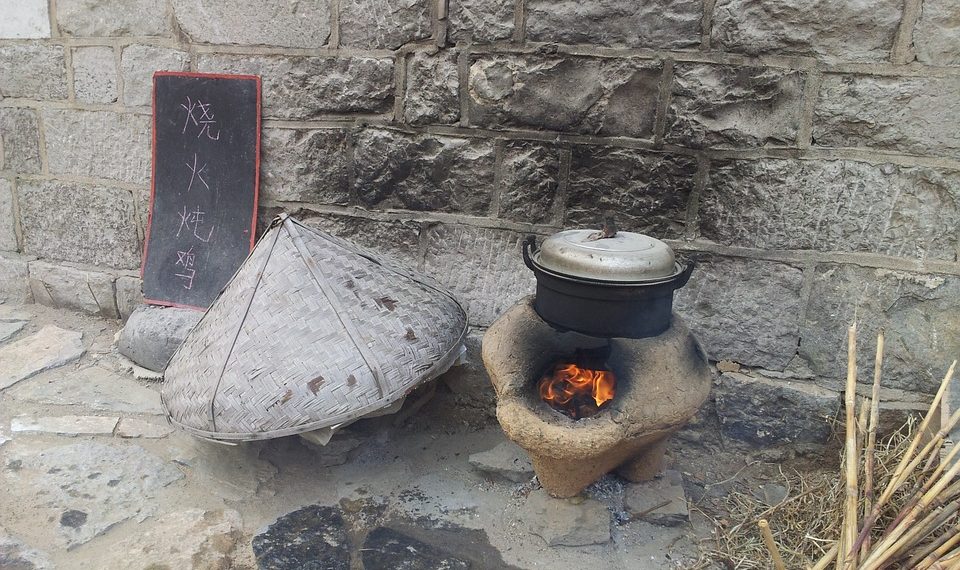
Jansz said household wood-burning stoves, use of incense sticks, poorly maintained office air-conditioned environments and vehicle emissions were frequent instances of indoor air pollution.
She pointed out that the World Health Organization had recommended preparing guidelines for indoor air quality.
“Indoor Air Quality (IAQ) is a growing concern. Most people spend about 90 percent of their time indoors. The quality of indoor air is important not only for occupants’ comfort but also for their health,” the ITI Environmental Technology said in a statement.
“Poor indoor air quality has been tied to symptoms like headaches, fatigue, trouble in concentrating, and irritation of the eyes, nose, throat and lungs. Also, some specific diseases have been linked to specific air contaminants or indoor environments, like asthma with damp indoor environments,” the ITI added.

Saturday, 23 February 2019

150 Sri Lankans get Mahatma Gandhi scholarship

150 Sri Lankans get Mahatma Gandhi scholarship


Colombo, February 21 (AIR): In Sri Lanka, 150 students from all 25 districts were awardedthe prestigious Mahatma Gandhi scholarships for study in India.
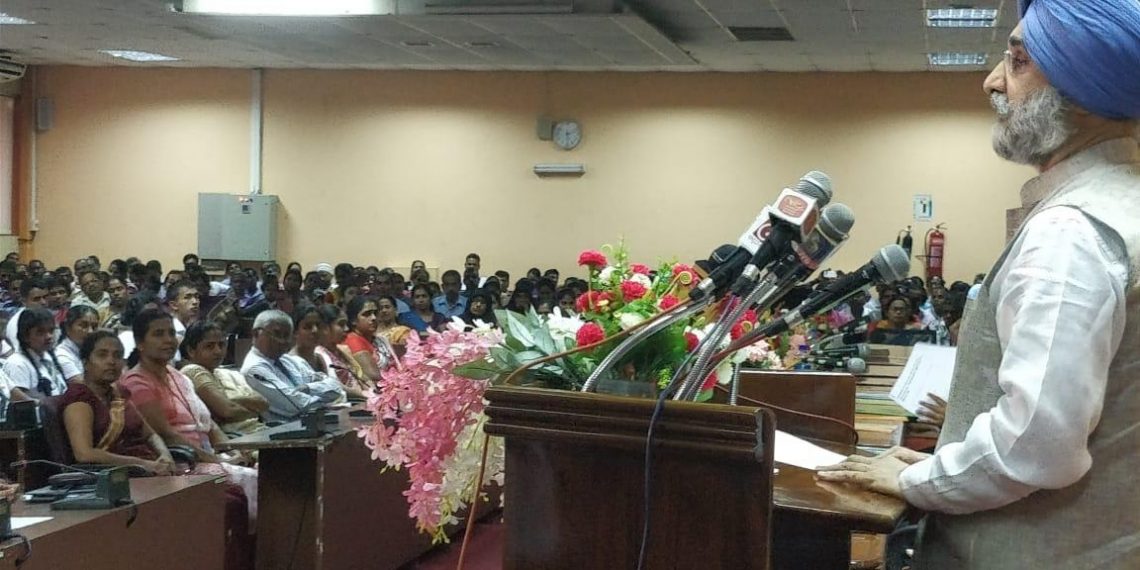
Sri Lankan education minister Akila Viraj Kariyawasam and Indian High Commissioner Taranjit Singh Sandhu gave the scholarships at a special ceremony held in Colombo on Wednesday.
This is the twelfth year in continuation that India has provided Mahatma Gandhi scholarships to bright students across Sri Lanka.
The minister appreciated the assistance provided by India including for the new trilingual school in Polonnaruwa and Saraswathy College in Kandy.
He also thanked India for providing training to teachers in Sri Lanka. High commissioner of India said that it was special occasion where 150 Sri Lankan students were awarded the Mahatma Gandhi scholarships while the world is celebrating the 150th Birth Anniversary of Mahatma Gandhi.
He urged the students in Sri Lanka to connect with the youth of India and told them to take advantage of scientific and educational developments in India.
The high commissioner noted that India has recently launched a new Portal titled “Study in India” and more than 25000 seats are earmarked in Indian Institutions for foreign students.
He expressed hope that Sri Lankan youth would make full use of the opportunities in India.
(The featured image at the top is that of Indian High Commissioner Taranjit Singh Sandhu addressing the scholarship holders)

Thursday, 21 February 2019

Sri Lanka to identify tourism development zones to boost arrivals

Sri Lanka to identify tourism development zones to boost arrivals


Colombo, Feb 21 (newsin.asia) – The Sri Lankan government will identify tourism development zones throughout the island which will concentrate on tourism related activities, a statement from the Sri Lanka Tourism Development Authority (SLTDA) said here Thursday.
The SLTDA embarked on a mutual partnership with the the Urban Development Authority (UDA) to identify the zones which will be set up to avoid ad-hoc tourism development and to avoid undesirable activities.
The zones are likely to be set up in places such as the central highlands of Ella and Nuwara Eliya and Arugam Bay, Kalpitiya, Beruwala, Hikkaduwa and Pinnawala. These areas are popular tourist areas.
“Sri Lanka has been identified as one of the fast-emerging tourist destinations in the South Asian Region. The island’s biodiversity, long lasted culture, historic monuments, exotic beaches, and evergreen environment can be identified as the key attractions for international tourists,” the SLTDA said in the statement.
“However, with the increased tourist arrivals various tourism related or associated activities are mushrooming in around popular tourist destinations. Most of these activities are developed in an irresponsible manner in the absence of proper development guidelines in existing and emerging tourism hubs,” the SLTDA added.
Such developments put invaluable cultural and natural assets at severe risk of degradation. At the same time, there are other locations, of which the potentials have yet to be properly explored for the development of tourism-related activities, the SLTDA further said.
Since the end of the island’s 30 year civil conflict between government troops and Tamil Tiger rebels, which ended in May 2009, Sri Lanka has emerged as one of the leading travel destinations in the world.
Last year, Sri Lanka received 2.3 million tourists while this year it is aiming to welcome 3 million tourists.

Sri Lanka the cynosure at Thai Travel Fair


The 2019 edition of the Thai International Travel Fair was held in Bangkok, Thailand last week. The inauguration was held at the Bangkok Convention Center at Central World Bangkok followed by a gala dinner at Centara Grand. The event was attended by over 500 tourism stakeholders from around the world including Sri Lanka.
The Chief Guest at the inauguration was the Tourism Minister of Thailand while the Guest of Honour was the Tourism Minister of Sri Lanka, John Amaratunga who received an enthusiastic welcome from the capacity crowd that was present.

Later on Minister Amaratunga declared opened the Sri Lanka Booth, which was the cynosure at the travel fair. Sri Lanka Tourism Promotion Bureau made use of the opportunity to launch a promotional microsite highlighting the Buddhist trail in Sri Lanka. The microsite consists of the main Buddhist tourism attractions in the country, meditation centres and facilities available to learn Buddhism in Sri Lanka. 

The microsite was launched by Minister Amaratunga along with Sri Lanka’s Ambassador to Thailand, Kshenuka Seneviratne, President of the Thai Travel Agents Association, Thanaphon Cheewarattanaporn and Chairman, Tourism Advisory Committee, Harry Jayawardena.

Meanwhile Minister Amaratunga and the Sri Lankan delegation met President of the Association of Thai Travel Agents, Vichat Prakobgosol on the sidelines of the Travel Fair.

The two parties discussed ways and means of increasing the number of arrivals to Sri Lanka from Thailand. Thai travel agents emphasised that relaxation of visa requirements will help increase arrivals. The Thai travel agents pointed out that outbound traffic from Thailand to Japan increased by over one million when Japan granted visa on arrival to Thai nationals.


Launch of Buddhist Trail micro website
Minister John Amaratunga speaking at the launch of Buddhist trail
Launch of the Sri Lanka booth


Tuesday, 19 February 2019

Sri Lankan tourism; all that glitters is not gold


Tourism in Sri Lanka was said to have reached an all-time high last year with a staggering 2.2 million tourists visiting the country. While news articles widely publicised this never before seen rate, little did anyone pay attention to return in investment and surge in local sales brought by these tourists. 

Most of the tourists visiting the country spend less than $ 500 a week – bringing very little income and indirect employment to our locals, which in turn does not contribute to our economy drastically. So what seems to be the issue here despite having a never before seen rate of tourists pour into Sri Lanka to enjoy our sandy beaches? Let’s dig a bit deeper into the issue. 


Digging deeper into the root cause


Whilst it’s important that Sri Lanka has a steady inflow of tourists, our legislative and other bodies do not pay attention to the type of tourists that visit the country. There has been a growing increase in budget hotels and other budget accommodations both in and out of Colombo, and this number only seems to be in the rising. Although the industry must cater to all levels of tourists, our tourism sector must pay special attention to bring down tourists with higher spending power as this is where the real sales and surge in our economy lies. 

In the past few years there has been a surge in many accommodations coming up in the North, Central Highlands, South and the Cultural Triangle of Sri Lanka. Almost 80% of these hotels have room rates below $ 90 for double half-board basis. Additionally, more and more hotels are coming up in these regions simply because owners find this lucrative market attractive and get into business either because they were advised by a friend or saw someone do well in the same trade. 

Diving headfirst into ventures without a proper plan

This isn’t healthy for hotels, banks and the Sri Lankan economy as there needs to be a substantial financial and business knowledge and planning put into a venture. The business will find it very hard in the long run to pay back their bank loans as it will take them between 10-12 years to breakeven whereas a hotel with a good business and financial model will breakeven between 5-7 years; simply because there was no solid financial plan at the inception therefore having a painful effect on the growth of the business. 

Tourists visiting Sri Lanka with lesser spending power, are not contributing to the growth of our economy. With a tourist spending less than $ 500 a week by cutting down on food, travel and any other possible expense whilst opting to stay at budget hotels, their actions are not helping indirect employment opportunities to grow. With foreigners choosing to either back-pack or choose low cost travel options like travelling by bus in town or train for long distances, they are not providing our local tuk tuk drivers and cab services indirect employment. 


Time for hotels to step up and improve their game

In addition to the majority of tourists Sri Lanka attracts, hotels too must take a step up and improve their services. Hotels can no longer rely on their restaurants and buffets to help make profits, as this accounts only up to 40% of the total sale. Hotels must focus on the remaining 60% that is the real value addition; accommodation services. However our fiscal standing doesn’t make higher priced hotel a beguiling destination for the cadre of tourists we attract. With 30% of a tax charged (with a breakdown of 10% Service Charge, 15% Value Added Tax &2% Nation Building Tax) in addition to the normal rates, tourists and locals alike are disheartened to yield a higher spending power. 


Corrective measures 

In order for Sri Lanka to attract the right kind of tourists which will in turn positively affect our economy and help our nation grow and provide our locals with direct and indirect employment, Sri Lanka must look into developing infrastructure and providing higher valued goods to attract the right level of clientele. Await to find out how Sri Lanka can facilitate an economic surge during our next publication. 

(The writer is an accountant by profession turned Head of Operations. He possesses over 29 years of expertise in the hospitality industry including 20 years of strong financial administration at five-star hotels. His expertise is spread throughout his various stints in various regions around the world including USA, The Caribbean, Middle East and Singapore as well as holding the position of an operation and commercial oriented Director of Finance, with a wealth of business experience. He is a highly result oriented professional, who believes in cohesive work environments and team work. He is now retired and consults professionally to a leading international consulting firm, whilst residing in his home in Colombo.)


Tourism industry grows by 2.2% in January


COLOMBO (News 1st) – Data released by the Central Bank of Sri Lanka shows that tourism earnings have increased by 2.2% in January 2019.

The data reveals the country earned nearly USD 458.4mn in January this year, compared to USD 448.5mn during January last year(2018).

Sri Lanka welcomed nearly 244,239 tourists in January 2019, indicating an increase of 2.2% from last year’s 238,924.

In 2019, the Sri Lankan tourism industry expects to attract more than 3 mn foreign tourists as Sri Lanka is ranked number 1 destination to visit in 2019 by Lonely Planet.

To achieve above-mentioned target Sri Lanka needs a growth rate of 28.5% on average. However, the current growth rate is at 2.2%.

Sunday, 17 February 2019

Sri Lanka's Tourism sector achieves US$ 4.4 billion revenue target


Jan 19, Colombo: Sri Lanka has earned over US$ 4.4 billion from tourism this year with revenue steadily increased by 11.6 percent compared to 2017, Sri Lanka Tourism Development Authority (SLTDA) said.

According to the SLTDA, the data suggests that an average duration of stay per person is 11 days in Sri Lanka while average expenditure is approximately 2000 U.S dollars.

The Industry expectations for 2019 are 3 million tourist arrivals and revenue of 5 billion U.S dollars with lonely planet naming Sri Lanka as the Number one destination to travel in 2019.

India, China, and Britain have managed to remain as the leading markets throughout the year in 2018 as well.


Saturday, 16 February 2019

Kishu Gomes appointed Chairman of Sri Lanka Tourism Development Authority


Kishu Gomes will be officially appointed as the Chairman of Sri Lanka Tourism Development Authority and Sri Lanka Tourism Promotion Bureau today, Tourism Development Ministry said.
Accordingly, Minister John Amaratunga is to present the letter of appointment to him this afternoon.

Thursday, 14 February 2019

sl Tourism to streamline promotion activities

Minister Amaratunge addressing the event looked on by Nilmin Nannayakkara, President at SLAITO Harith Perera and Mervyn Fernandopulle. Picture by Sudath Malaweera

Sri Lanka Tourism has kick started their promotional campaign for 2019 and around 15% of the budget has already been exhausted so far, said Director, Marketing at Sri Lanka Tourism Promotion Bureau, Madubhani Perera. The total budget for 2019 is around Rs. 6 billion.
She said that most of the promotion budget was invested to participate in international fairs in 2019. Perera said that last year the sum allocated for tourism Promotion was around Rs. 5 billion but only around 75% of it was used.
Meanwhile Minister of Tourism Development, Wildlife and Christian Affairs, John Amaratunga said that a proposal has been made to the cabinet to offer Visa on Arrival to tourists from Thailand.
“I am returning from an event in Thailand and their tourists are keen to visit Sri Lanka. Thai nationals are offered free visa on arrival to travel within the ASIAN region. I proposed to the cabinet to offer similar facility for them when visiting Sri Lanka.”
The Minister said that though they were targeting 3 million arrivals for 2019, if there were no political issues in Sri Lanka, this target can reach up to 3.1 million. He said that already there is a 2.2% arrival growth in January as against the previous year. 
Speaking at an event jointly organized by Sri Lanka Association of Inbound Tour Operators and Tourist Hotels Association of Sri Lanka (THASL) the Minister said that this year Sri Lanka will play host to many MICE events and the biggest would be the United Nations event in March where over 3,000 delegates would participate.
He however said that successive governments have not taken serious measures to increase capacity at the Colombo airport and this has put a check on many new budget airlines that want to fly to Sri Lanka.
“There is a huge congestion at the immigration counters and steps should be taken to offer one separate lane for Sri Lankans which would speed up matters at Customs,” he said.
The Minister also said that two former Vice Presidents of Sri Lankan Tourism Promotions Bauru, Nilmin Nanayakkara and Mervyn Fernandopulle were exonerated of all charges and this proves that the judiciary is impartial.
“Both of them did not make any decisions or even take any favors while serving in the SLTBP. They merely placed their signatures on Board decisions.”


Wednesday, 13 February 2019

Harnessing the real potential of tourism industry

After much drama, a new head has been installed at the country’s tourism establishment. Corporate leader Kishu Gomes on Monday assumed duties as Chairman of both the Sri Lanka Tourism Development Authority and Sri Lanka Tourism Promotions Bureau (SLTPB). 

During a press conference last Friday, Gomes promised bringing in at least three million tourists to Sri Lanka this year. The country achieved 2.3 million tourists in 2018, about 200,000 short of the target, which was originally set. 


Although Sri Lanka has achieved considerable growth in the tourism industry, in terms of tourist arrivals and earnings in the post-war period, it has been far from the country’s true potential, which was recently named the best destination to travel in 2019 by the world-renowned travel guidebook brand Lonely Planet.


Gomes is a proven business leader in Sri Lanka’s thriving private sector and has over three decades of experience at top management positions. He is probably one of the youngest Sri Lankans to ever head the local operations of a multinational company. The added advantage is that he has a strong marketing background. 
Last week, he proudly told the media that his DNA is marketing and brand communication. The experience and strategies of Gomes as a marketer could become invaluable for the long-delayed global marketing campaign of Sri Lanka tourism. The Tourism Development, Wildlife and Christian Religious Affairs Ministry last week said they would soon present a detailed plan of the said campaign to the Cabinet, after incorporating the views of Gomes.


The soft launch of the campaign is scheduled to take place at the world’s largest tourism trade fair, ITB Berlin, this March. The three-year campaign, which received the SLTPB board approval recently, will focus on promoting Sri Lanka tourism in eight key source markets, with an estimated budget of Rs.3.0 billion.


Sri Lanka has been feeling the need for a proper destination marketing campaign for a while. But the initiatives taken towards it at various times under several tourism ministers were impeded by the country’s toxic politics and procurement scandals.


This probably is the best juncture in Sri Lanka Tourism’s history to launch a massive promotional campaign as the country’s governance structure remains relatively strong and the civil society’s ability to influence the politics is high. 


However, it is vital to come to a consensus on how to position Sri Lanka as a tourism destination before embarking on a major marketing push. Prime Minister Ranil Wickremesinghe on several occasions had said given Sri Lanka’s limited carrying capacity, the country should look at attracting high-end tourists, who spend a considerable amount of money during their stays. 


However, given the rising number of informal accommodation providers, it is clear that Sri Lanka is becoming more of a backpackers’ paradise than a sojourn for high-spending tourists. It is believed that Sri Lanka’s vibrant informal tourism sector played a major role in the country being selected as the best place to travel in 2019 by Lonely Planet. 


Hence, the tourism authorities and the industry should reach a consensus as soon as possible on where to position Sri Lanka as a tourism destination, to give a clear message out to the prospective tourists. Every country that recognizes tourism as a major contributor to its economy must have a tourism identity and Sri Lanka shouldn’t be an exception, despite its diverse tourism product offering. 


It is essential that Sri Lanka creates itself a fine balance between high-spending tourists and backpackers and all the country’s promotional and marketing campaigns should revolve around this notion.


Meanwhile, a proposal has been pushed forward by a group of hospitality sector stakeholders urging the authorities to consider giving the country’s tourism industry the export industry status. Even at the height of the separatist war, the tourism industry was able to attract tourists to the country and earn the much-needed foreign exchange to the economy. 


When the tsunami wrecked havoc in the southern and eastern coasts of Sri Lanka, the industry was able to rise from wreckage within a very short time, showing its resilience. Hence, the government should seriously look at including tourism into its export strategy and provide the necessary concession, similar to the other export industries.


Also, the suggestion to establish tourism trade zones, similar to that of export processing zones, could also be a very innovative approach to develop some of the underdeveloped tourism hot spots in the eastern and northern parts of the island.


All in all, what is needed as far as the country’s tourism sector is concerned, is a new approach—be it promoting the country through a global marketing campaign or providing the industry with the much-needed impetus by recognizing their efforts throughout the years. 


One thing we should always keep in mind as Sri Lankans is that worker remittances still remain the highest foreign exchange earner, despite the country having such potential for tourism. Isn’t this anything short of a national embarrassment? 

Sri Lanka Tourism roadshow in Chandigarh ends on high note

Sri Lanka India
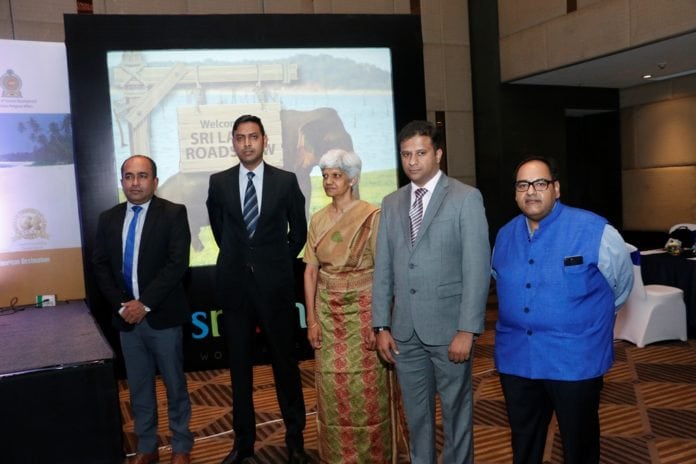
The Sri Lanka Tourism roadshow in Chandigarh, organized by the Sri Lanka Tourism Promotion Bureau (SLTPB), has concluded on a high note with attendance of approximately 150 respected guests and dignitaries, not just from Chandigarh but also from neighboring cities like Ludhiana, Karnal, and others. The event started with B2B meetings, followed by presentations by the Tourism Promotion Bureau and SriLankan Airlines.
The event was attended by Ms. Upekkha Samaratunga, Minister (Commercial) for the Sri Lanka High Commission in New Delhi; Mr. Viranga Bandara, Assistant Director of the Sri Lanka Tourism Promotion Bureau; Mr. Chinthaka Weerasinghe, Manager- Northern India of SriLankan Airlines; and other respected dignitaries. The roadshow in Chandigarh is a part of Sri Lanka Tourism’s 7-city roadshow in India, and Chandigarh is the first city in this series.
eTN Chatroom: Discuss with readers from around the world:

Mr. Sutheash Balasubramaniam, Managing Director of the Sri Lanka Tourism Promotion Bureau, shared with media: “Sri Lanka has gained popularity and has experienced robust growth in India. We are organizing these events to explore the unique island of hospitable people to woo travel agents and increase flow of Indians from Chandigarh .The road show would enhance the visibility among the travel, trade, and consumers to position Sri Lanka as the preferred destination in Asia. Ramayana Trail sites widely scattered across the country will be of unique experience, particularly to Indians. We are confident that in 2019 a lot of more Indians will choose Sri Lanka as their preferred holiday destination.”
He further said that currently, Sri Lanka Tourism is exploring new kinds of promotions similar to that of the ongoing MasterCard campaign. Plans are underway to jointly work with airlines and tour operators to promote the destination more aggressively. The participants from Sri Lanka included Apple Holidays, Jetwing Travels (Pvt) Ltd., Asian Adventure Travel Management company, HTCEY Leisure Pvt Ltd., Walkers Tours Limited, Hamoos Travels, Karusan Travels, Luxe Asia, Green Holiday Center, Riu Hotel & Resorts, Bernard Tours (Pvt) Ltd., Lanka Reisen Ceylon (Private) Limited, Exotic Global Holidays, Esna Holidays Pvt Ltd., B.O.C. Travels (Pvt) Ltd., and Travelwind Holiday Pvt Ltd., along with Sri Lanka Tourism officials and SriLankan Airlines’ officials who showcased unique tourism offerings, latest developments, and exclusive products for the India market.
Chandigarh is one of the most important cities in terms of the outbound tourism market of India and has one of the highest per capita incomes in the country. This road show is expected to further strengthen tourism relations between travel partners of both countries and aims at increasing the traffic of HNIs and high-affluent Punjab travelers to Sri Lanka.
Sri Lanka has seen substantial growth in tourist arrivals from India in the year 2017, with over 3.84 lakh Indian travelers. This makes India one of the top 5 tourist arrival markets in Sri Lanka. Also, Sri Lanka is one of the top 10 holiday destinations for Indian travelers, so with this roadshow, the Tourism Board is looking forward to extending its reach beyond metro cities of the country.
This 7-city roadshow aims at strengthening tourism relations between travel partners of both countries and is part of SLTPB’s strategic efforts to promote Sri Lanka as the most preferred short-haul holiday destinations for Indian travelers.

Wednesday, 3 October 2018

Understanding the current industry trend towards bespoke tourism


The current trend within the tourism industry in Sri Lanka is leaning towards bespoke tourism, which hints at growing opportunities and challenges for the tourism sector in general.
Bespoke tourism is growing in popularity around the world. The reason for this is because it’s similar to choosing between off-the-peg suits over tailor-made suits. No matter how well the design is, a bespoke version is going to fit you much better.
To elaborate further, nowadays, travellers look for something more than the traditional organised tours that are centred round famous attractions. They search for more unique and authentic experiences that will connect them to the values and cultures of the country they visit.
According to Phocuswrite, 57% of travellers feel that brands should tailor their information based on personal preferences, and they would be far likelier to pay more for their services if the brand meets these requirements. This is something that is pertinent to the Sri Lankan market as well since this tendency to request specific experiences and luxuries minus the inconveniences is something that Viluxur Holidays has seen with regard to bookings.
It is an open secret that Sri Lanka is catering to mass markets – think India and China. This has led to price wars that have negatively affected Sri Lanka by cheapening its overall offerings. For example: compare the average room revenue for a hotel and an average selling price for a travel agent – you will observe that the value keeps going down even when the number of arrivals are increasing.
At present, there is only a small minority of tour operators and hotels that are willing to cater to tourists who desire a bespoke experience that borders on customisation and luxury. Interestingly, but unsurprisingly, it is largely millennial travellers that are looking for a bespoke tourism experience compared to other generational travellers. The shift in this trend seems logical given this day and age where information is freely available. The millennial traveller is looking to garner a connection at a deeper emotional and personal level by experiencing a country’s history, culture and people. In other words, they are looking for authenticity.
It is this proclivity towards authentic experiences that has led to the rise of initiatives, for instance, like – Cook Like A Local. This noteworthy shift led Viluxur Holidays to develop its own online platform – Taya Finch – that focused on the online traveller; this was a valid and potent decision since business has increased for Taya Finch over the past two years that it has been in operation. This brings me to another topic, which are online bookings, and its incessant rise in terms of usage.
Nowadays technology has advanced to a level where you can get whatever you want with a click of a button. From ordering food to clothes to even medicine, everything is available online and it is far more informative than it was 10 to 15 years ago. The internet has become the biggest marketplace to sell goods and services.
Recently, I came across an article published on a recent study carried out by the Association of British Travel Agents (ABTA) for their holiday habit report in 2017; approximately 80% of travellers from the United Kingdom book their holidays online whereas only 17% make the same transaction via a phone call or a travel agent. Moreover, the fact that 50% of our holiday bookings are made through mobiles, which is expected to increase next year, gives rise to the increasing importance of assimilating technology when it comes to user experience. Needless to say, the need to make websites and booking systems mobile friendly is indisputable.
Thus far I have spoken about the importance of shifting the focus towards bespoke tourism, and while there have been discordant whispers from certain quarters that Sri Lanka doesn’t have the infrastructure to cater to such discerning needs from luxury-hungry tourists: let me assure you that this is an erroneous fact. To prove my point, unlike Thailand or the Maldives, Sri Lanka is one of the most culturally-rich places that have many UNESCO World Heritage Sites; within a few days, you can cover Kandy, Dambulla, Anuradhapura, Sigiriya and Galle Fort et cetera. Sri Lanka also possesses 26 national parks with a great degree of biodiversity not to mention the availability of marine life in locations like Mirissa.
What was lacking in the Sri Lankan tourism industry is the lack of awareness amongst travellers. Most of them did not know of Sri Lanka, what to do in Sri Lanka or what as a nation it has to offer. However, at present, we see a concerted effort by the Government along with the Sri Lanka Tourism Promotional Bureau in taking necessary steps to promote Sri Lanka by creating awareness campaigns in countries such as China, India, Germany, France, UK, and Australia amongst many others while also concentrating on creating awareness using the necessary Social Media Platforms. This also has made it possible for Sri Lanka to get highlighted globally, which has given rise to these niche market segments.
With tourism being one of the main contributors to the country’s GDP, value additions like crafting bespoke experiences that cater to the requirements of a new generation of travellers is mandatory to say the least.
Moreover, current trends are indicative of tourism increasing exponentially, which could serve as a warning to the tourism industry in general: a warning because evolving according to the business climate of today is imperative. To drive this point home, I will leave you with a pertinent quote from James Cash Penney of JC Penney — “No company can afford not to move forward. It may be at the top of the heap today but at the bottom of the heap tomorrow, if it doesn’t.”
Source

Tuesday, 2 October 2018

Bosnia calls for greater cooperation in tourism with Sri Lanka


Bosnia and Herzegovina and Herzegovina is firmly placing itself on the map in global tourism markets, leaving behind its conflict-ridden past. The country, which maintains high standards in health and education fields, is projected to have the third highest tourism growth rate in the world and is considered one of the fastest growing economies in the region. With longstanding relations with Sri Lanka, Bosnia and Herzegovina Ambassador Dr. Sabit Subasic during a recent visit to Sri Lanka speaking to Daily FT called for improved trade relations focusing on tourism, sharing of resources and knowledge for promotion and exchanges between the two countries. Following are excerpts: 


According to World Tourism Organization, Bosnia is one of the fast-growing destinations in the world. We are third fastest growing tourism destination in the world. I know that tourism in Sri Lanka is booming and it should be improving much more. I think we should have more cooperation in the area of tourism cooperation, more exchange of ideas. Sri Lanka needs more facilities and infrastructure for tourism, so I think it would be better to establish more cooperation in that area to improve tourism promotion in both countries. Apart from that we have to improve tourism exchange to increase the number of Bosnian tourists visiting Sri Lanka and Sri Lankans visiting Bosnia. We have established links with the Sri Lankan tourism industry and in Bosnia we are working towards this and we will see what we can do 

I would like to have more cooperation with the two ministries of the two countries. To create the capacity of the two countries, we have huge potential. We are in discussion with dignitaries with the Sri Lanka tourism industry and I suggested exchanges of officials to explore new ideas between the two countries 

I would love to have more cooperation in the area of education, in terms of student exchanges – that is an excellent instrument for improving bilateral relations; students are excellent ambassadors for countries

Source

Monday, 10 September 2018

Sri Lankan tourist police told to learn Hindi


In addition to English, they should also learn widely used international languages such as Chinese, Hindi and French

 Sri Tourism Visa

In a few years, the tourism sector in Sri Lanka is expected to become the largest foreign exchange earner for the country.

Sri Lankan tourist police told to learn Hindi.In addition to English, they should also learn widely used international languages such as Chinese, Hindi and French

In a few years, the tourism sector in Sri Lanka is expected to become the largest foreign exchange earner for the country. Published: 16:42 August 13, 2018 IANS

Colombo: Sri Lanka's Inspector General of Police Pujith Jayasundara on Monday said 25 new police posts will be set up covering all the main tourist spots across the country for visitors' security. And police personnel have been asked to learn Hindi.

The decision was taken after discussions with the Chairman and senior officials of the Sri Lanka Tourism Development Authority (SLTDA), Xinhua news agency quoted Jayasundara as saying.
"Officers of the Tourist Police Division should pay special attention to language training. In addition to English, they should also learn widely used international languages such as Chinese, Hindi and French," Jayasundara said.

He said a new uniform would be introduced to the Tourist Police Division.

In a few years, the tourism sector was expected to become the largest foreign exchange earner for the country. Therefore, ensuring safety of the foreigners visiting Sri Lanka will be a top priority for the police force, Jayasundara said.

Sri Lanka's tourism industry, once heavily scarred by a 30-year ethnic conflict, has become one of the leading industries after it was dubbed one of the world's greatest tourist hot spots by several international publications.

Source

Tuesday, 4 September 2018

Sri Lanka mulls cutting excessive airport fees to boost tourism

https://www.etavisa-srilanka.org/
Sri Lanka Tourism


Sri Lanka is reviewing how to reduce airport fees to make the country more competitive with the rest of Asia and make the country more attractive to tourists Sri Lanka's tourism minister said.
"A review is being done as to how best we could reduce the landing charges, fueling charges and airport taxes," Amaratunga said. 

He admitted that excessive airport fees are being passed on to airline ticket prices to Sri Lanka, making the country less attractive for potential tourists. 


Sri Lanka has a state monopoly supplying fuel at the airport and there is no competition. When fuel supply is competitive if there are procurement irregularities and the petroleum firm pays high prices to buy fuel, it will lose out to competition. 

While many East Asian airports are also state-run, their fees are lower.
For example in a Colombo-Kuala Lumpur Colombo ticket sold by Malaysian Airlines for 34,656 rupees, the Colombo Malaysia leg is 19,918 rupees and the KL Sri Lanka leg is 14,738 rupees.
Airport embarkation fees and taxes in Malaysia is 2,874 rupees and in Sri Lanka 8,094 rupees. Airport taxes are 40 percent of the ticket price in Colombo. 


On Malindo Air, in a ticket priced at 41,348 rupees, out of taxes of 10,968 rupees, 8,094 are for Sri Lanka. 

Meanwhile Amaratunga said discussions are ongoing on other taxes as well. 

Sri Lanka also has value added tax and nation building tax on tourist products, which however is a reasonable given the need to broadbase taxes and end exemptions. 

However in many countries VAT paid by tourists is reclaimable. 

There is however a need to collect tax from the sector as many of the larger hotels that have come up have tax holidays and taxes like the NBT are simple to collect especially if booking engines could remit them directly to the state. 

Source

Sri Lanka seeks enhanced military training from India

Sri Lanka has sought enhanced military training from India, according to President Maithripala Sirisena’s office. Visiting Indian Defe...